▒
Overview
 The
Seepage Cut Off (SCO)
element
can be used to simulate the behavior of structural waterproof
members. Main role of the element is to control seepage DOF on
the line or face The
Seepage Cut Off (SCO)
element
can be used to simulate the behavior of structural waterproof
members. Main role of the element is to control seepage DOF on
the line or face
▒
Methodology
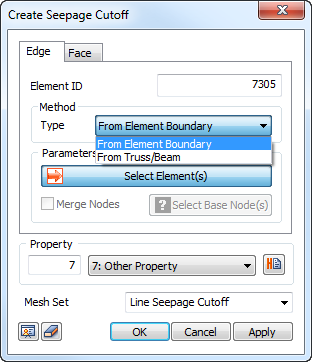
In 2D analysis, select
a line element (From Element Boundary/Truss/Beam element) to define
the impermeability.
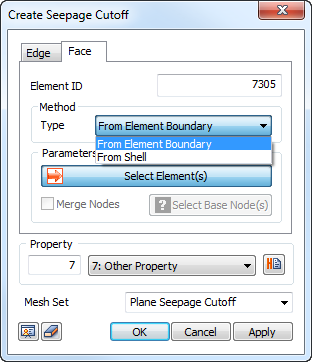
In 3D analysis, the impermeability
can be defined by selecting the face element (From Element Boundary/Shell
element).
From
Element Boundary
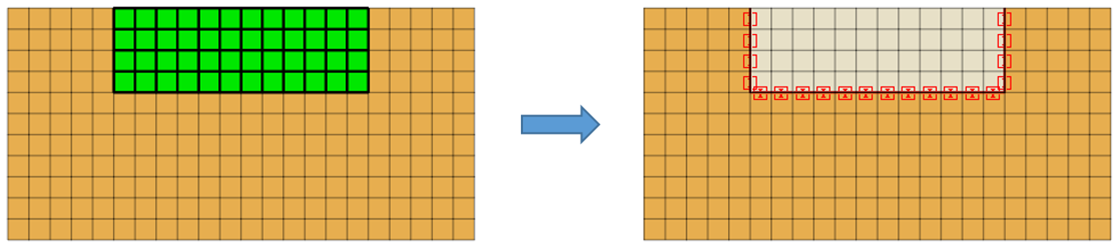
Create an SCO element at the boundary
position between the selected element and adjacent element, as
shown in the figure below.
Selecting all elements cannot create
an SCO element because there are not adjacent elements.
From Truss/Beam
(for 3D case - Shell element)
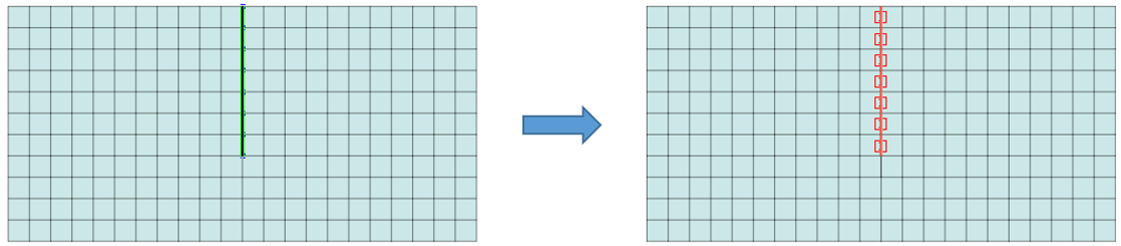
Create an SCO element using the
truss/beam element.
For 3D, use a plate element.
Creating a seepage cut off element
for structural elements such as truss/beam/shell generates “impermeable
interface” element on both sides of the element.
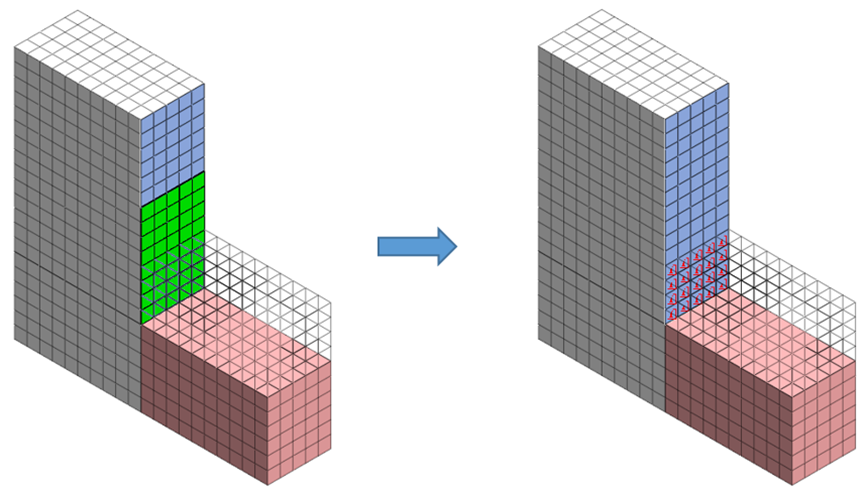
▒
Property
Checking the Seepage Flow DOF option
allows for control the flow rate/impermeability characteristics.
(※
When checked: consider the
effect of seepage, when not checked: consider the impermeability
effect)
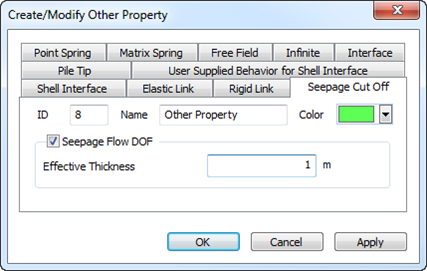
The
effective thickness used in Seepage Flow DOF is the effective
thickness for the imaginary size used for the calculation of the
seepage flow and it defines the width of the structural member
▒
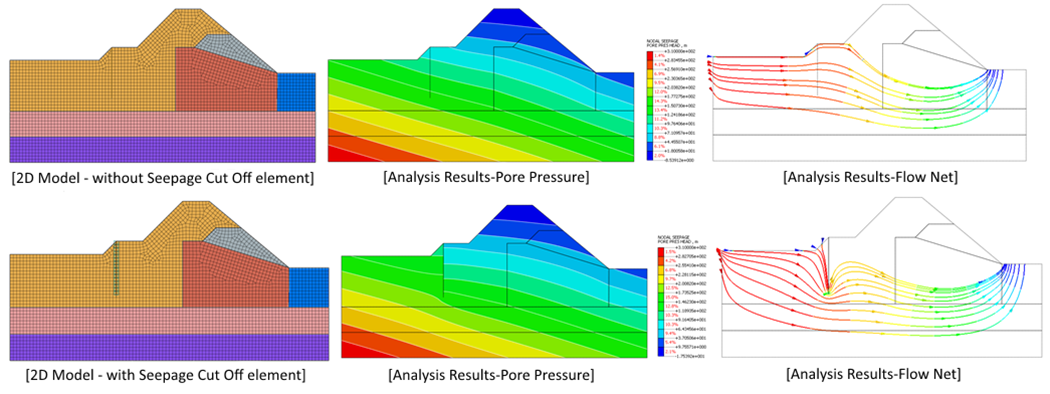
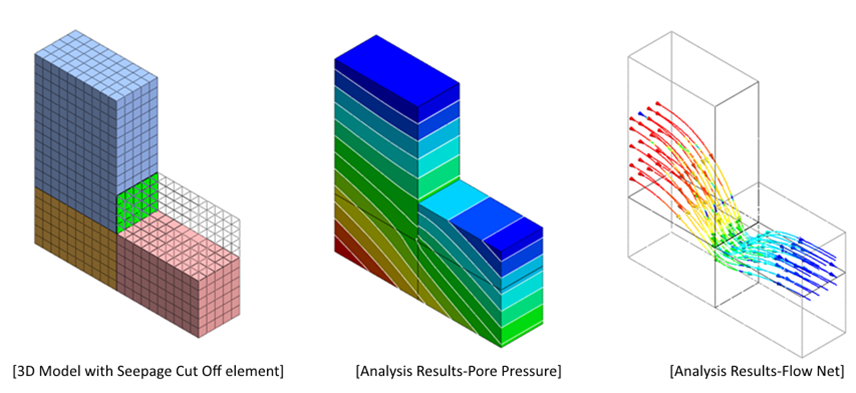
Results Comparison
2D
analysis case (via Truss/Beam element type)
3D analysis case (via Shell
element type)
|


